

Three Sisters
A triple glimpse at some vigorous visions

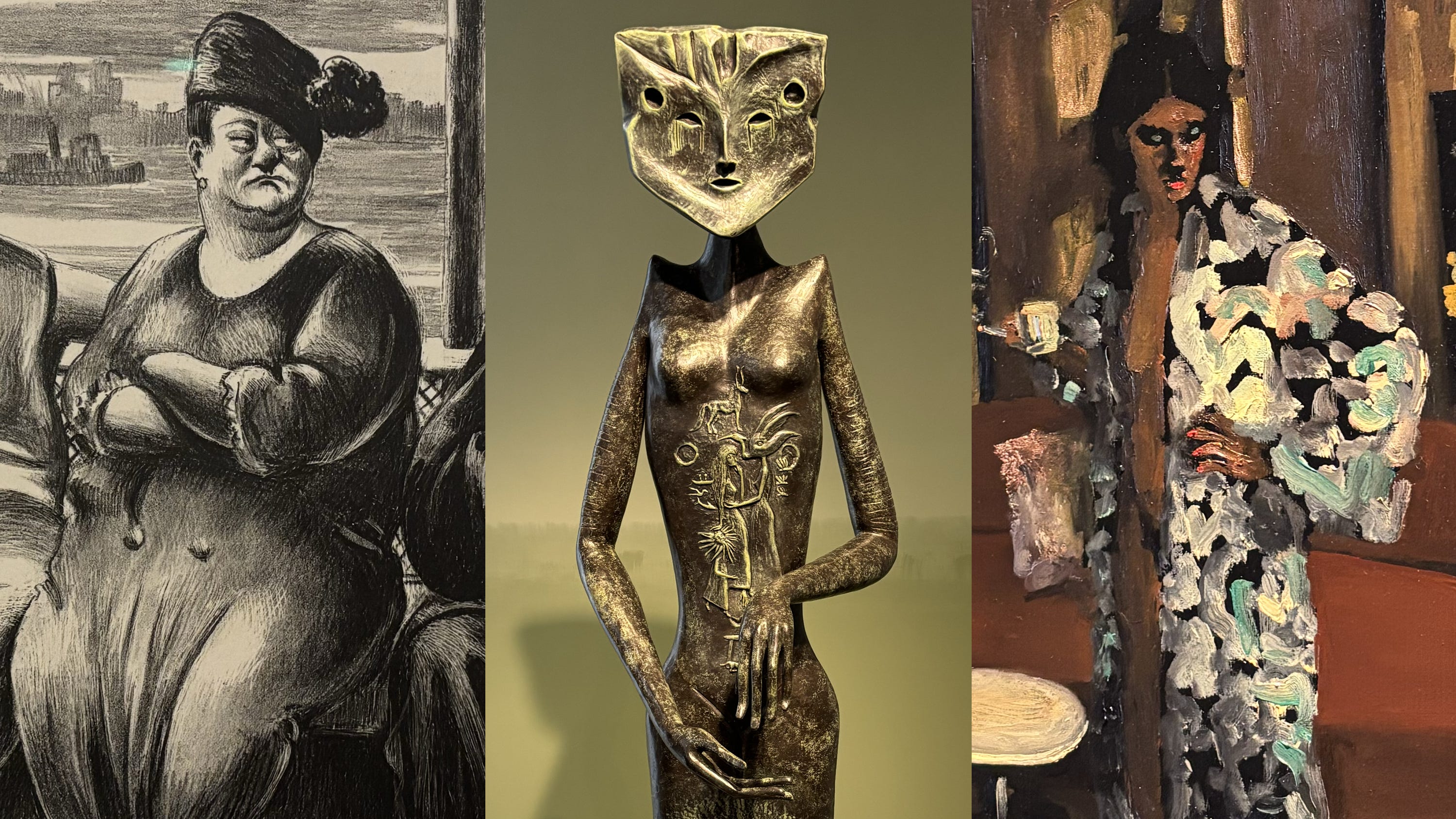
I’ve been to see some art recently. A lot of it I liked, some of it was meh, but but three artists in particular really stood out for me. It happens that they are three women from completely different generations, who create work in completely different styles. I’m not sure how to define what, if anything, they have in common, but it’s interesting to imagine them at a table together, discussing their lives and works. I wonder what they’d have to say to each other.
I had mentioned last week that I attended the Whitney Biennial, and the experience left me feeling… whelmed. Despite some intriguing individuals works, the whole didn’t quite feel up to the moment, whatever I expected that to mean. But nestled away on the third floor, in the small gallery between the classrooms and the administrative offices, there was a smaller show that I was really happy to catch.
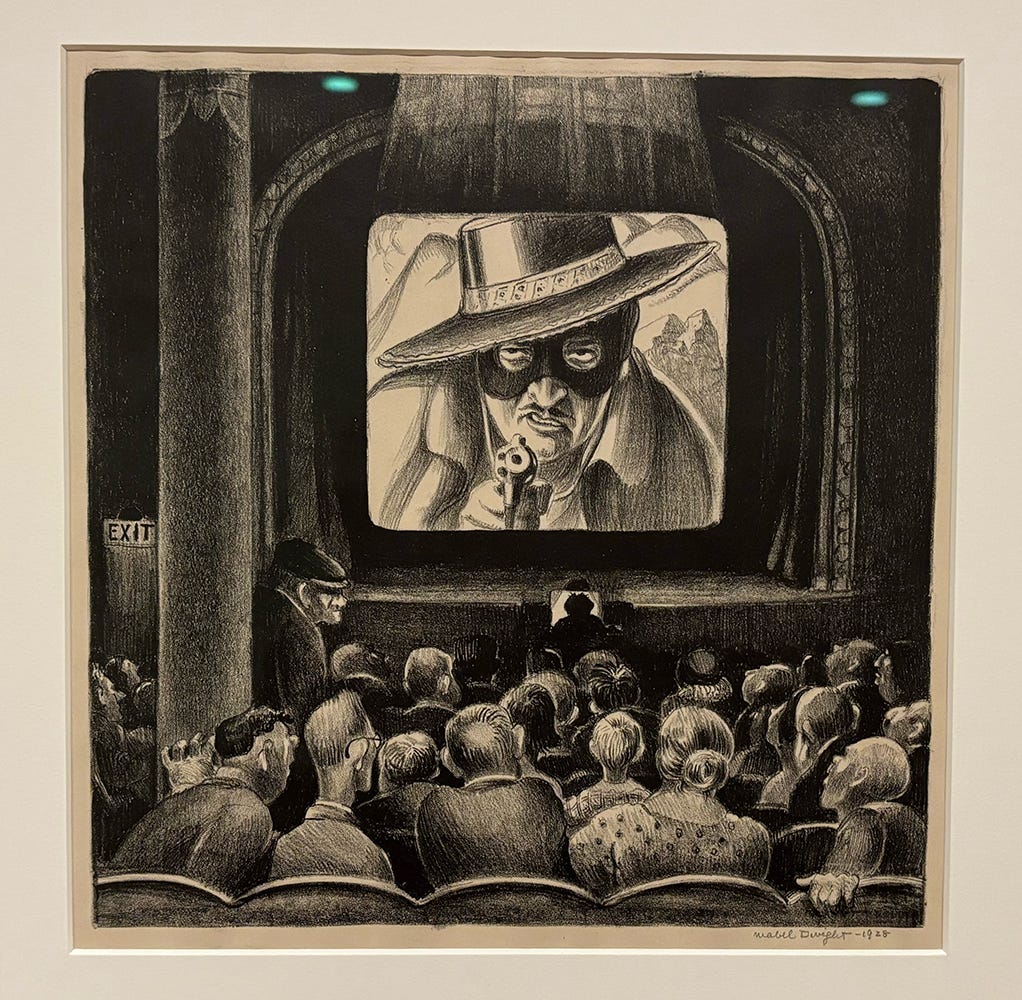
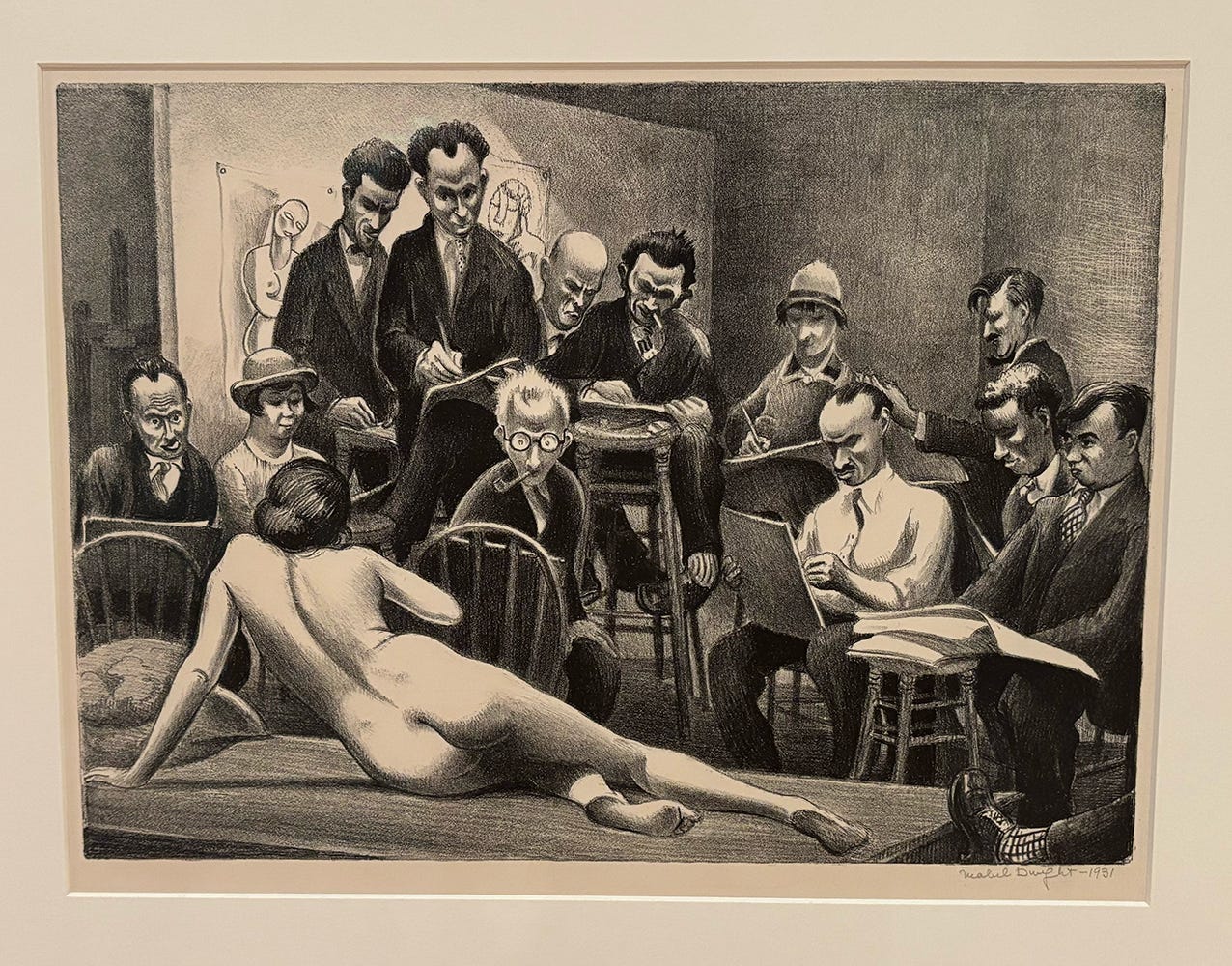
Mabel Dwight (1875-1955) was an illustrator working in the first half of the 20th Century, specializing in the complex, labor-intensive medium of lithography. Her images are filled with satirical, progressive content which, despite the genial curves of her figures, demonstrated sharp perspectives with real bite. Her chiaroscuro effects bridge the gap between the frivolities of the American commercial illustration of the time and the darker expressionism of socially conscious European artists like Käthe Kollwitz.
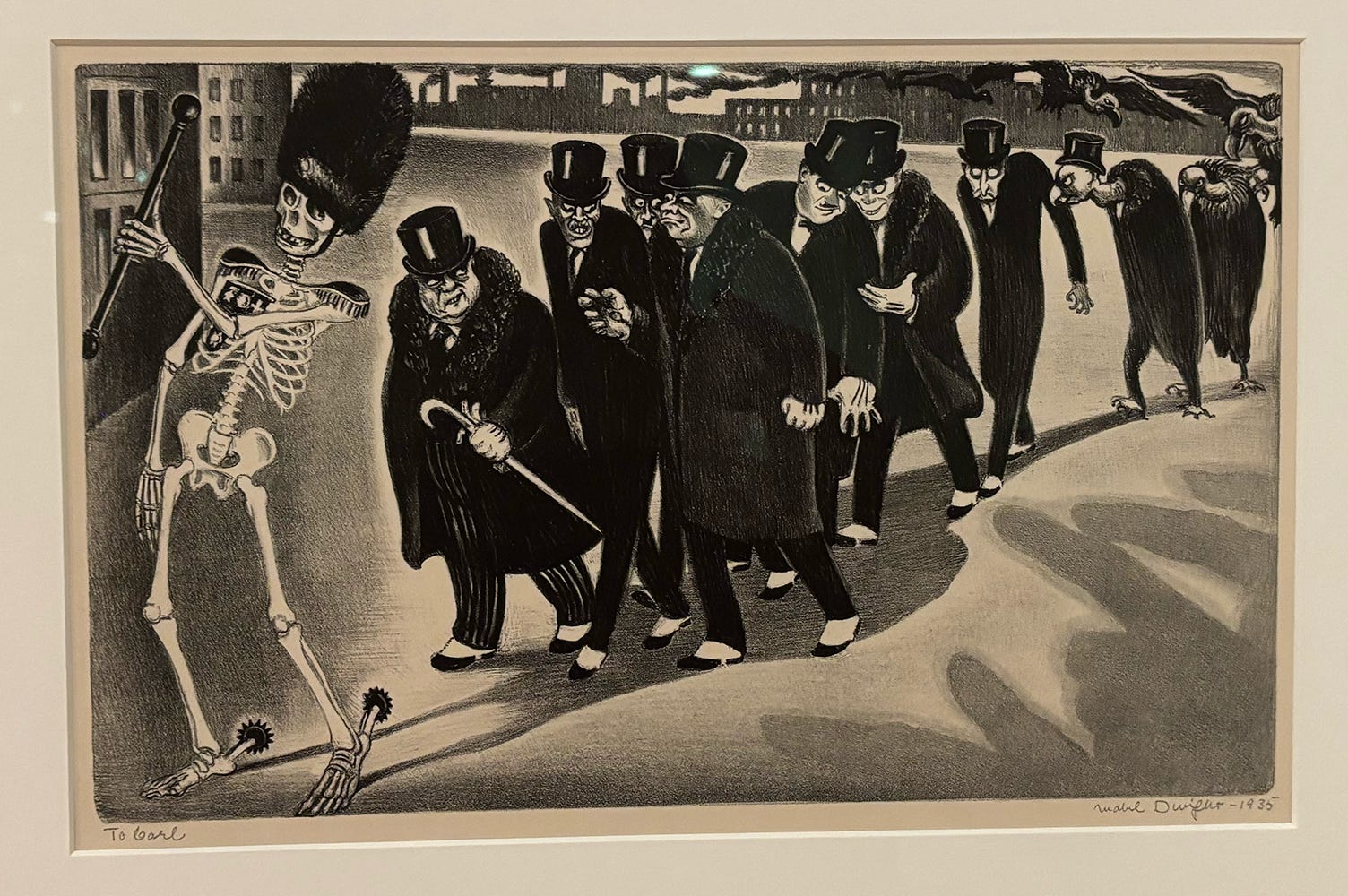
The result is an eerie blend of cultural observation, playful caricature, and political criticism. Many images evoke the uncompromising vision of a George Grosz or Otto Dix, but rendered in a friendlier style that was compatible with popular publications like her clients Fortune and Vanity Fair.
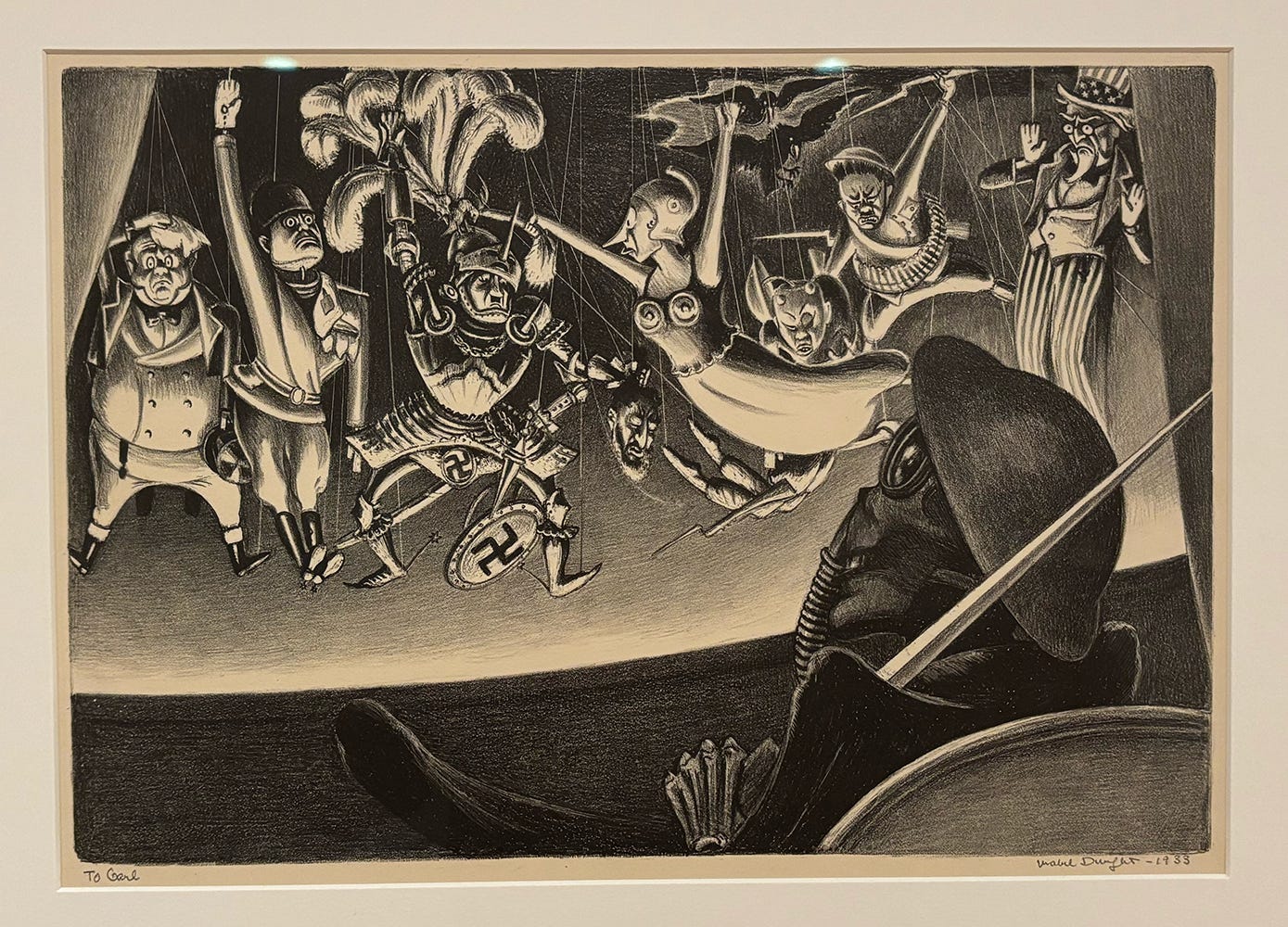
Early in her career, Dwight honed her craft in the Whitney Studio Club, Gertrude Vanderbilt Whitney’s precursor to the Whitney Museum, and her work was included in the first Whitney Biennial in 1932-33. On the fringes of the latest Biennial, it was gratifying to see someone whose work falls more on the illustration end of the spectrum represented at a major institution, especially in the context of an event that proved to be so diffuse in its definition of what makes for powerful art in the cultural chaos of the 2020s. Despite the elaborate installations and multimedia experiences on other floors, Dwight’s work made me realize I’ll never get tired of looking at flat images applied directly to paper.
The following weekend, Hope and I spent an afternoon in the company of a friend traversing a few Chelsea galleries. This is something I want to do more often, as I always enjoy it, but I have a difficult time keeping track of everything that’s going on and actually making a plan. (The fact that galleries are generally closed on Sundays doesn’t help matters.) It’s a pity, because every time we make it happen, it’s more than worth the effort.
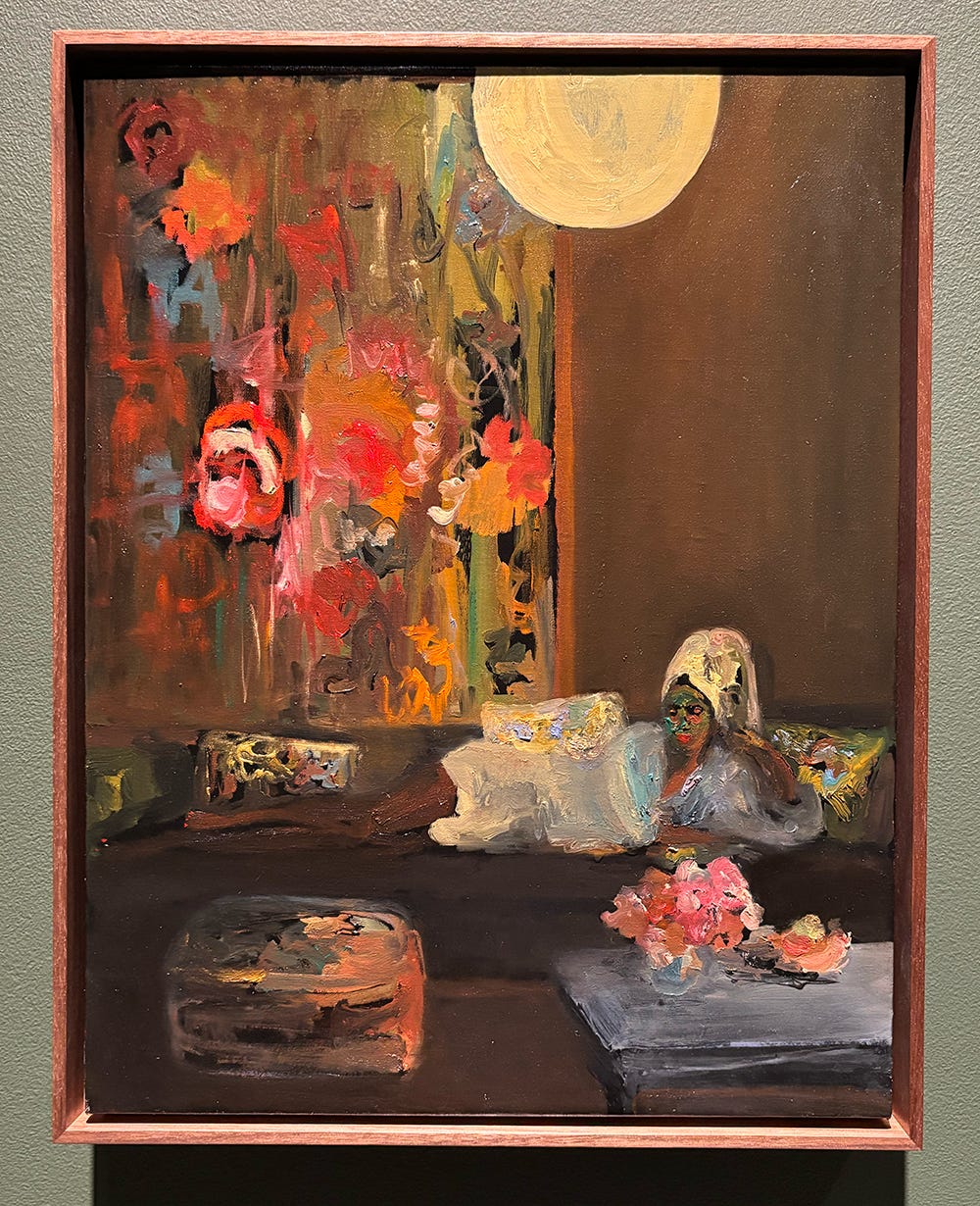
A painter that our friend particularly wanted to see was someone I’d never heard of before, Danielle McKinney (b. 1981), whose work was on display at the Boesky Gallery. Based in Jersey City, she paints moody domestic interiors peopled by lone figures in various states of undress—smoking, dreaming, thinking, waiting.
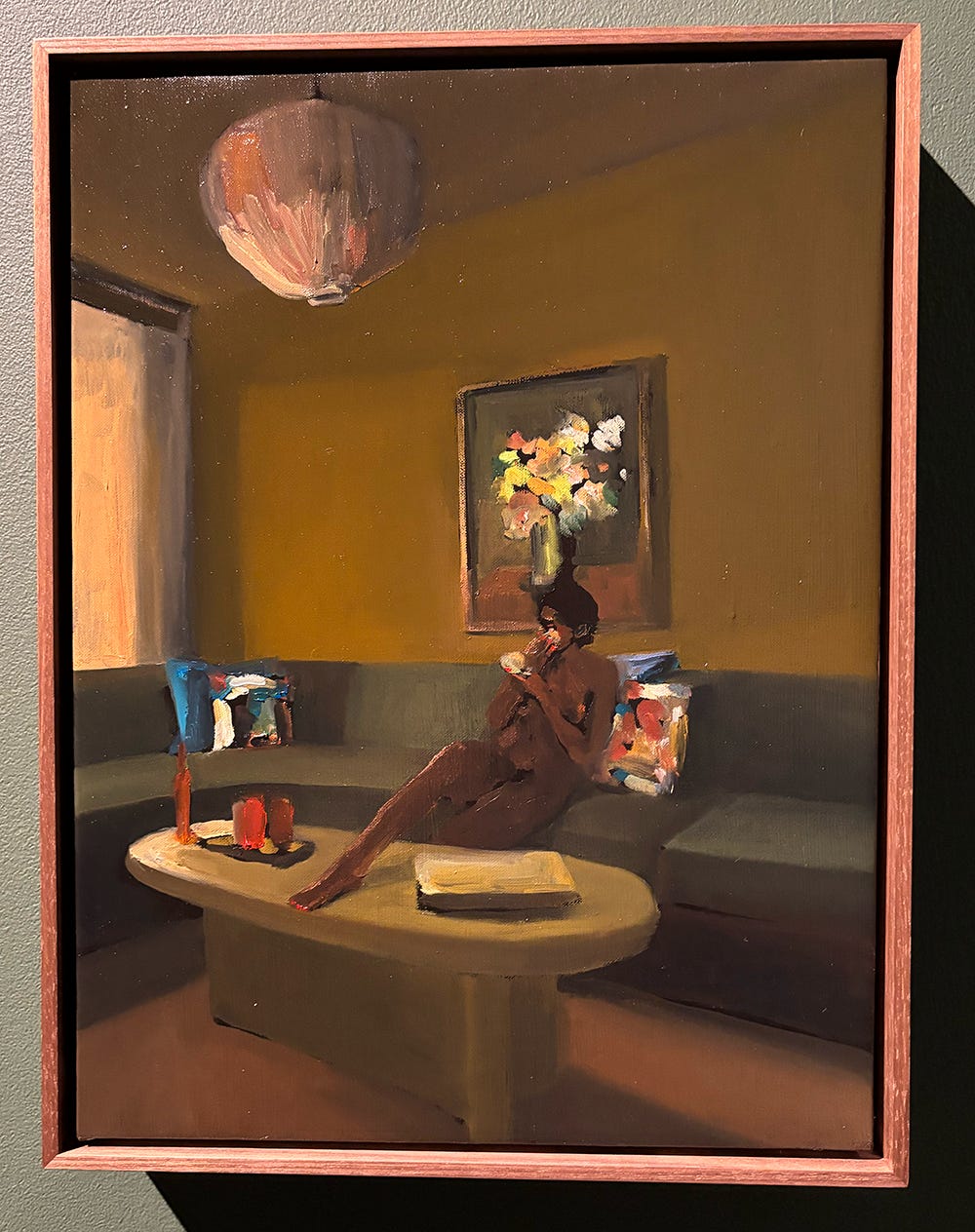
The photos online looked nice enough, but I wasn’t prepared for the jewellike intensity of these small canvases. Likewise, these photos here won’t do them any justice—imagine dimming the lights, upping the saturation, and standing near enough to be drawn into an unexpected intimacy while the world bustles around in the far distance. Up close, the smooth, glossy, earth-toned backgrounds set off abundant but delicate daubs of paint in surprising bursts of color, depicting a series of private moments in warm but exclusive spaces
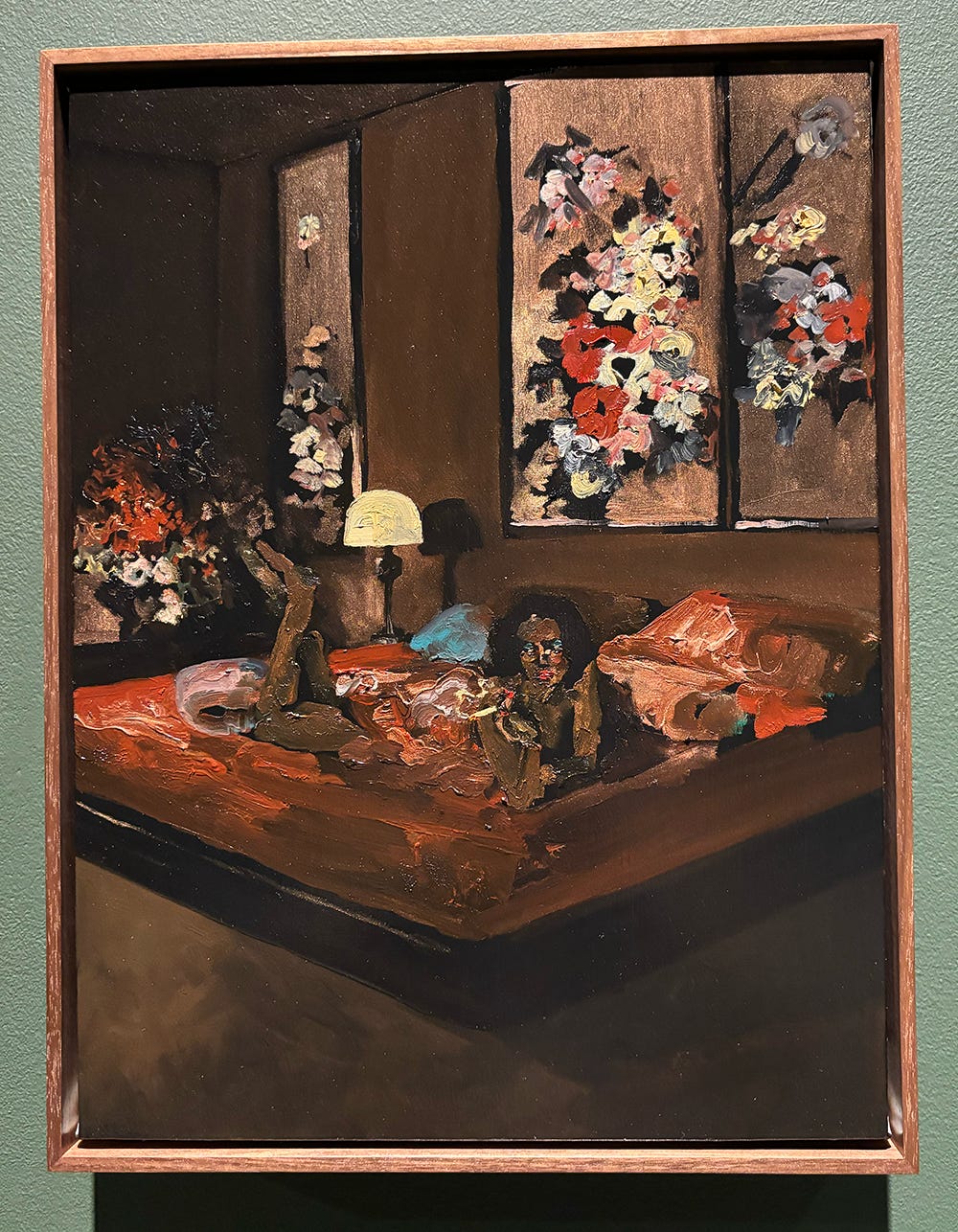
At first glance, these lone protagonists, idle and perhaps a bit wistful, feel a bit like the bleak dreamers of Edward Hopper. But these characters are fully in control of their narrative—they’re not at loose ends, but cool and collected, contemplating their next move. Our friend pointed out that glamour and luxury are very out of style at the moment, which is true—anything that smacks of wealth is automatically suspect. But McKinney’s figures—all Black women, steeped in the comfort of a confident solitude—add a dignified presence to the tactile and visual materials they’re in contact with, and the sensation is seductive. With a Hopper, you’re on the outside looking in, but with McKinney, you’re nestled in a comfortable chair across the room, inhaling the same smoke, privileged to share the space with such sophisticated company.
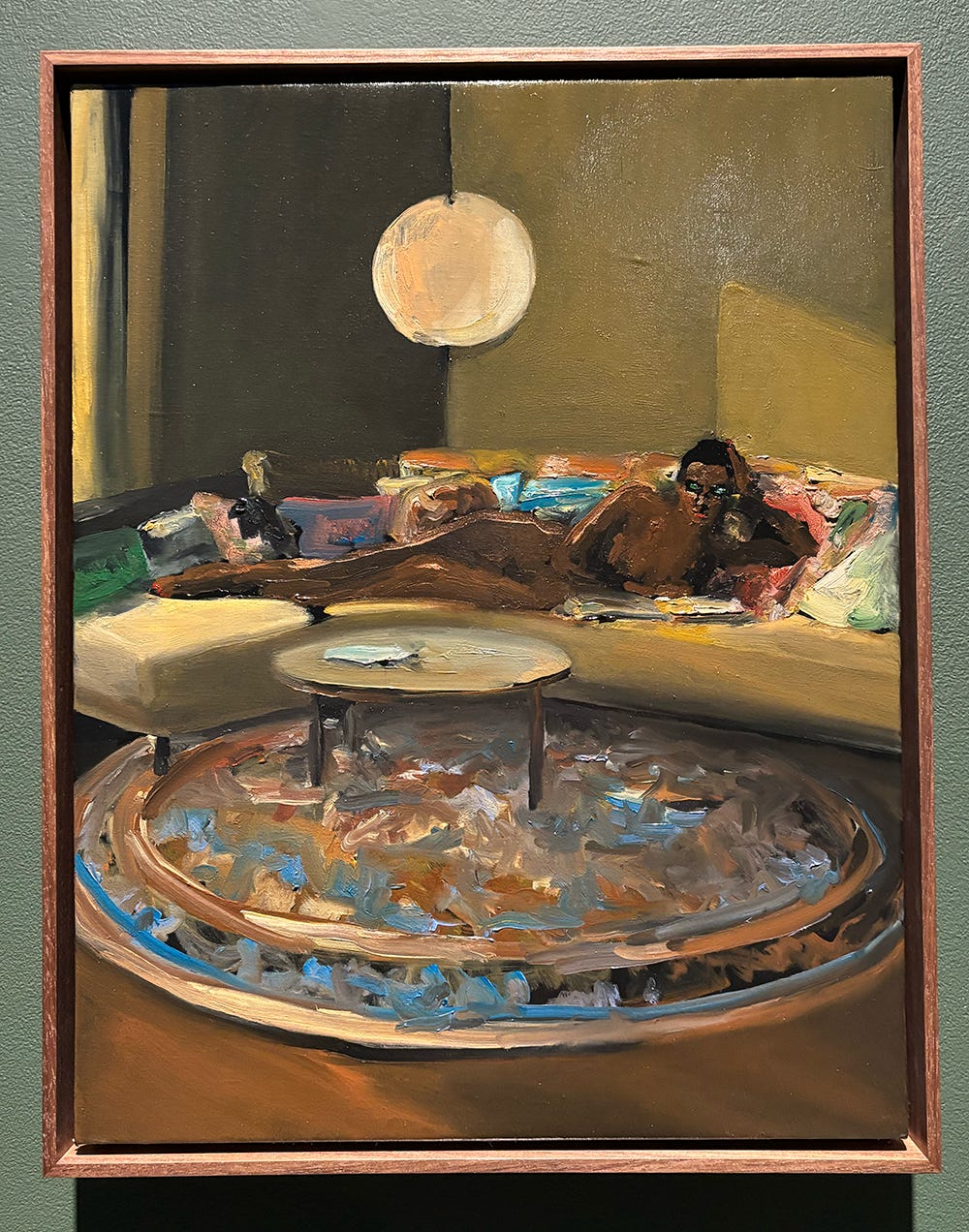
The pleasure these images evoke is incredibly sensual—which, yes, includes sexuality, but is more than that. The lavish conviction projected by these women prevents them from being objects. McKinney’s grounded command invites you to share her luscious delight in the colors and textures she’s created. A breath in the wrong direction and these paintings could be kitsch, but instead their beauty revels in the satisfaction of having earned it.
But the most important of these recent art outings was a visit to the L’Space gallery, to see a series of sculptures by Leonora Carrington (1917-2011).
Carrington is such a giant figure in the landscape of my imagination, a British society girl who fell in young with the Surrealists and left everything behind for a jagged life of creative exertion. She was living a bucolic existence in rural France as a budding artist—not to mention Max Ernst’s lover—when WWII broke out and everything went to shit. She had a breakdown, spent some time in a Spanish asylum (the subject of her heart-of-darkness memoir Down Under, an early publication of which I ran into at the New York International Antiquarian Book Fair last month), and eventually washed up in Mexico City, where she spent a long and fruitful career growing into a mystical grand dame whose elaborate canvases abounded with strange creatures and occult symbols.
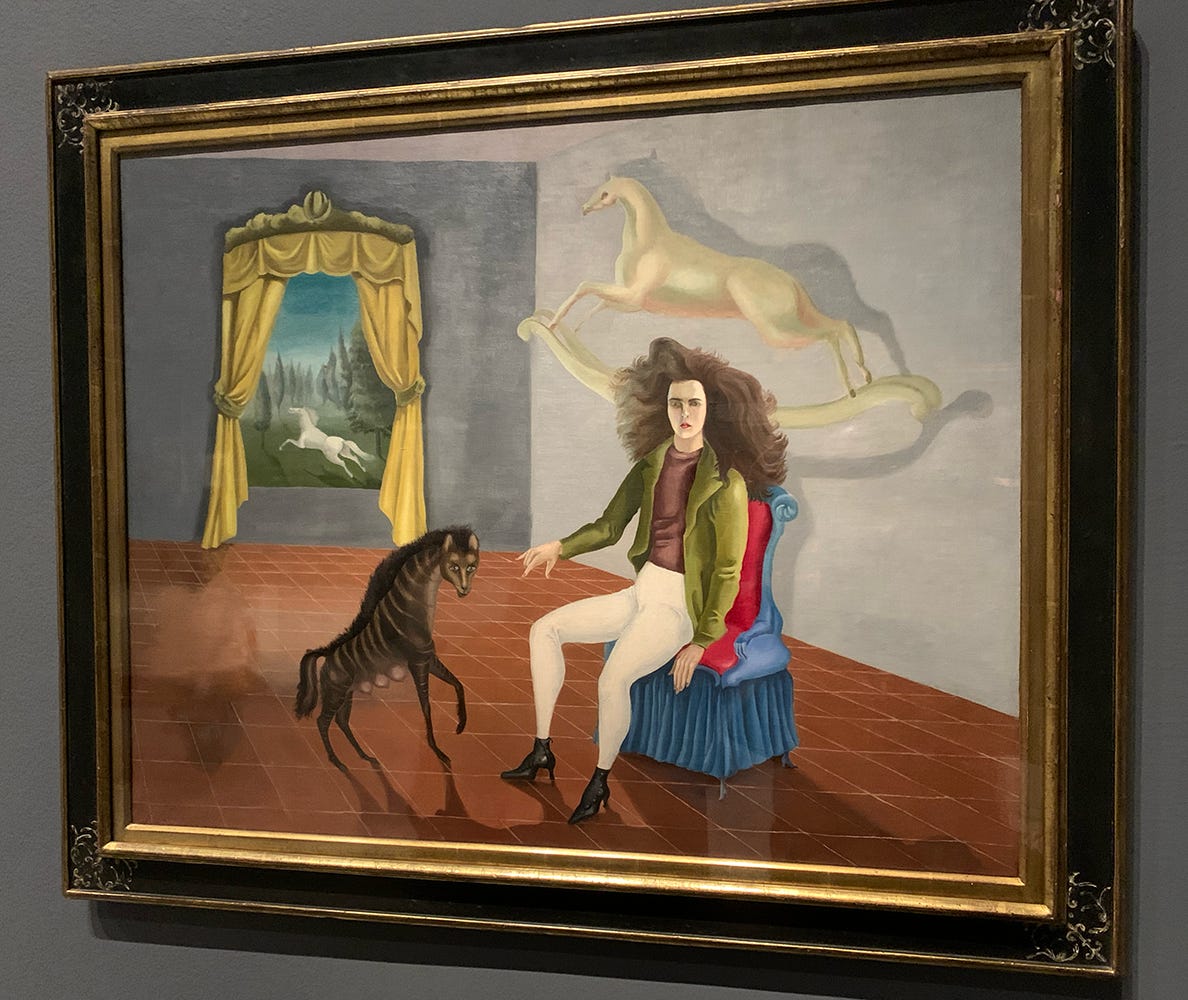
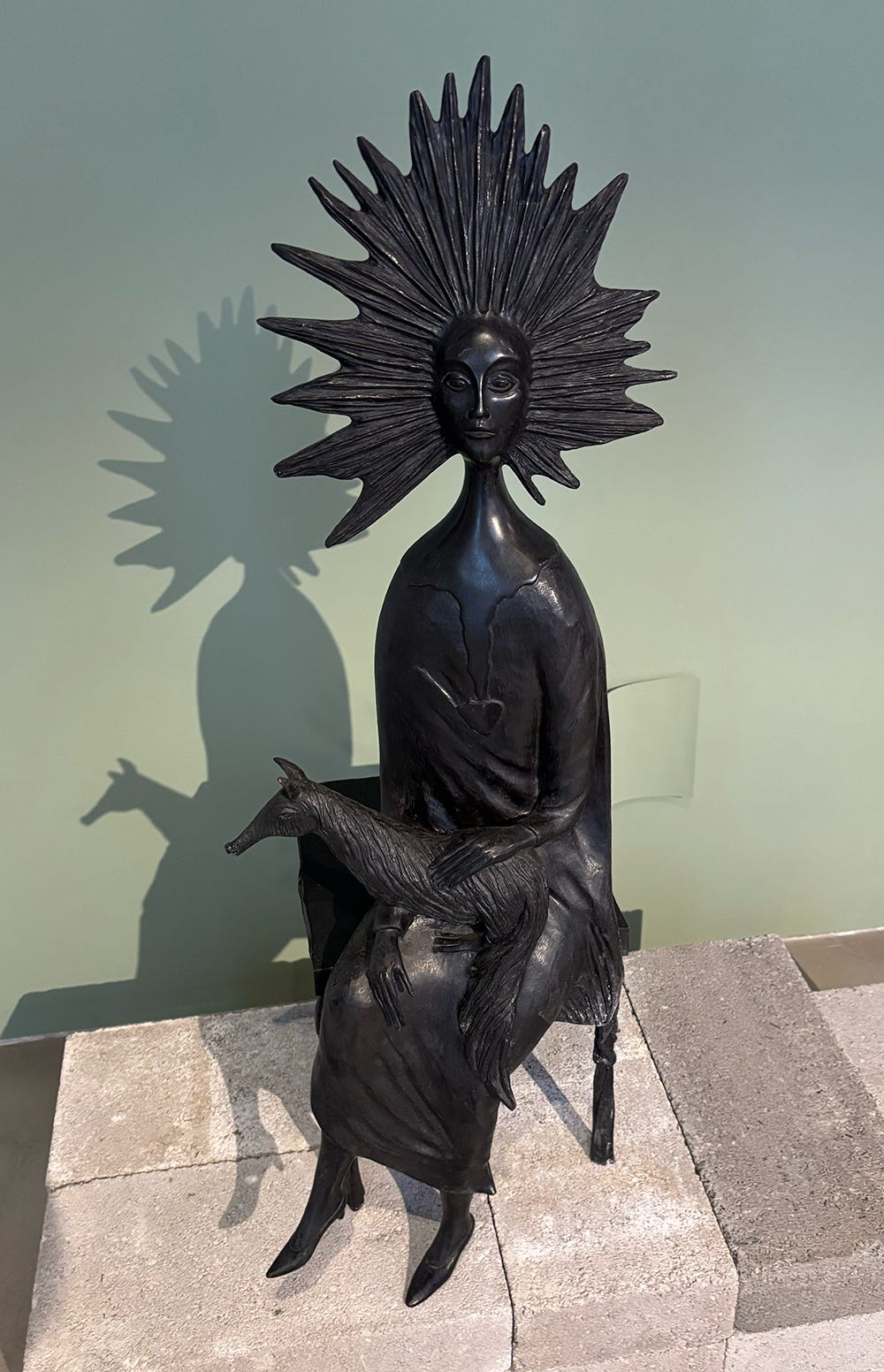
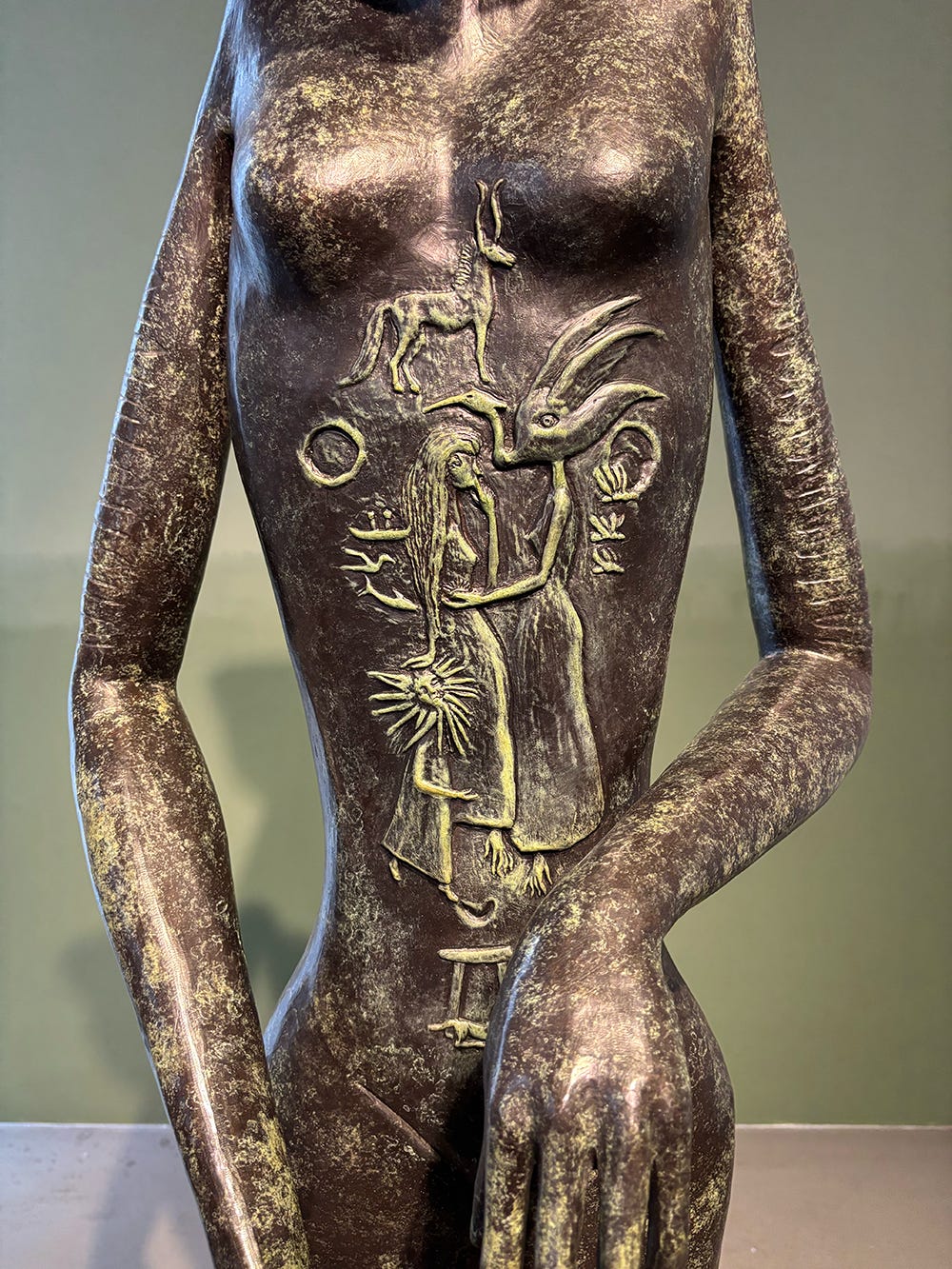
These creatures burst out into three dimensions at L’Space, whose curators have established a garden-like habitat where they can stare enigmatically back at the curious observers who weave among them. Though they’re made of heavy stone and bronze, they still retain the earthy lightness of the dryad, or perhaps even Queen Mab—they seem like they’d be most at home in an overgrown, semi-civilized courtyard somewhere, a space where the borders between nature and culture remain hotly contested.
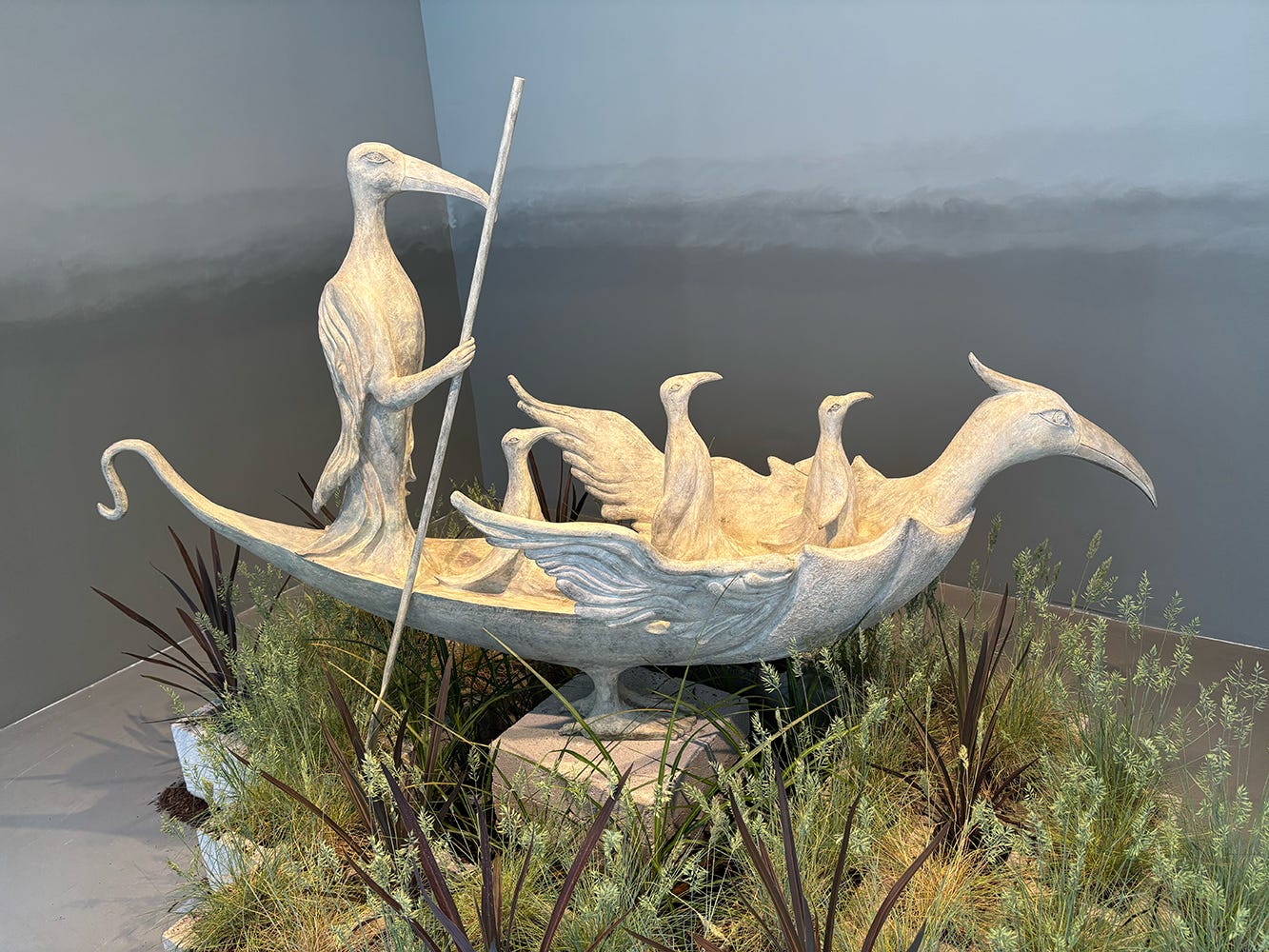
Many of Carrington’s figures have been conjured straight from her paintings, which is apt, because all of her work seems to take place in the same shared universe. It’s an imposing place at first, a swirl of influences that mix European and Mexican folklore with the provocations of her avant-garde peers and predecessors, filled with beings that would as soon consign you to the terrors of a dark vortex as look at you—but the longer you spend in it, the easier it is to detect flashes of gentleness and humor. Respect us, these forces seem to say, and we’ll tolerate you.
Carrington’s 1974 novel The Hearing Trumpet, one of my favorite books, embodies this dynamic in reverse. It starts out as a comical, shaggy-dog story of an elderly, near-deaf woman who, completely written off by her family, is sent to a mysterious rural nursing home to wait out her lingering decline. Once there, however, she discovers conspiracies and secret histories, until the story culminates in an elaborate visual climax of cosmic scope—one of her monumental, unsettling paintings come to life.
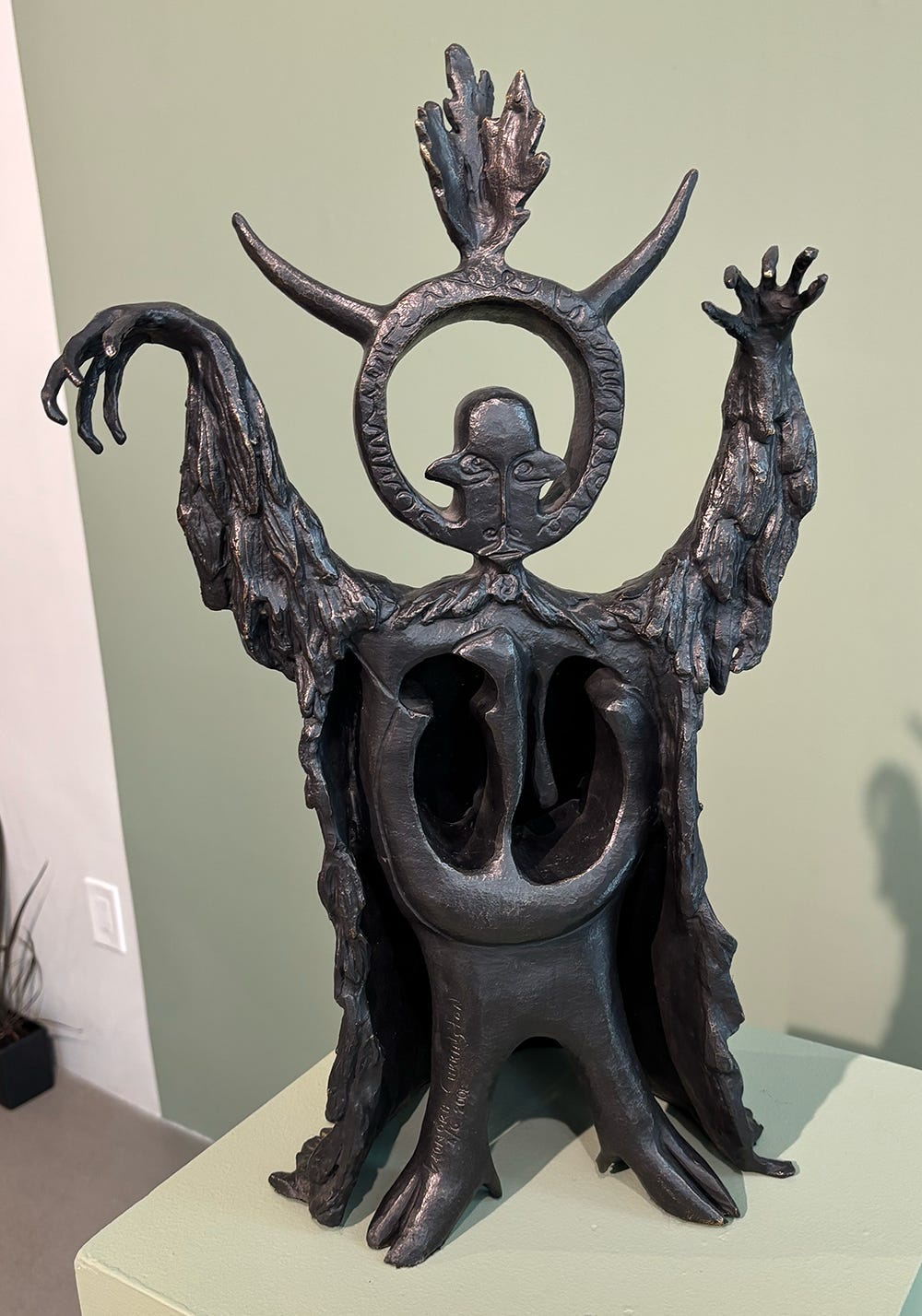
The feeling is similar at L’Space, if a bit more modest due to having to elbow past fellow gawkers shuffling around with their phones out. (Again, photos are of little use here.) But if you can will yourself to imagine what it would be like to be alone in that room, in dim light, the sculptures true power creeps up on you. It’s possible to stand in front of a piece like Catwoman, its figure adorned with bas-relief glyphs representing lost myths that feel familiar in their strangeness, and envision yourself as a character in one of Carrington’s pagan limbos, preparing yourself to execute some mysterious but vital task that the balance of the universe depends upon.
A side room near the entrance displays prints of Carrington’s celebrated tarot cards, along with a bit of an interactive game. You’re invited to pick up a card from the deck spread out on the table (you can purchase your own, of course, for an exorbitant fee), and then match it to one of the cards on the wall, each of which has a number written below it. You then enter a dark, curtained booth, where you can punch the number into a small console, which sets three different vintage telephones ringing, one representing the past, one the present, and one the future.
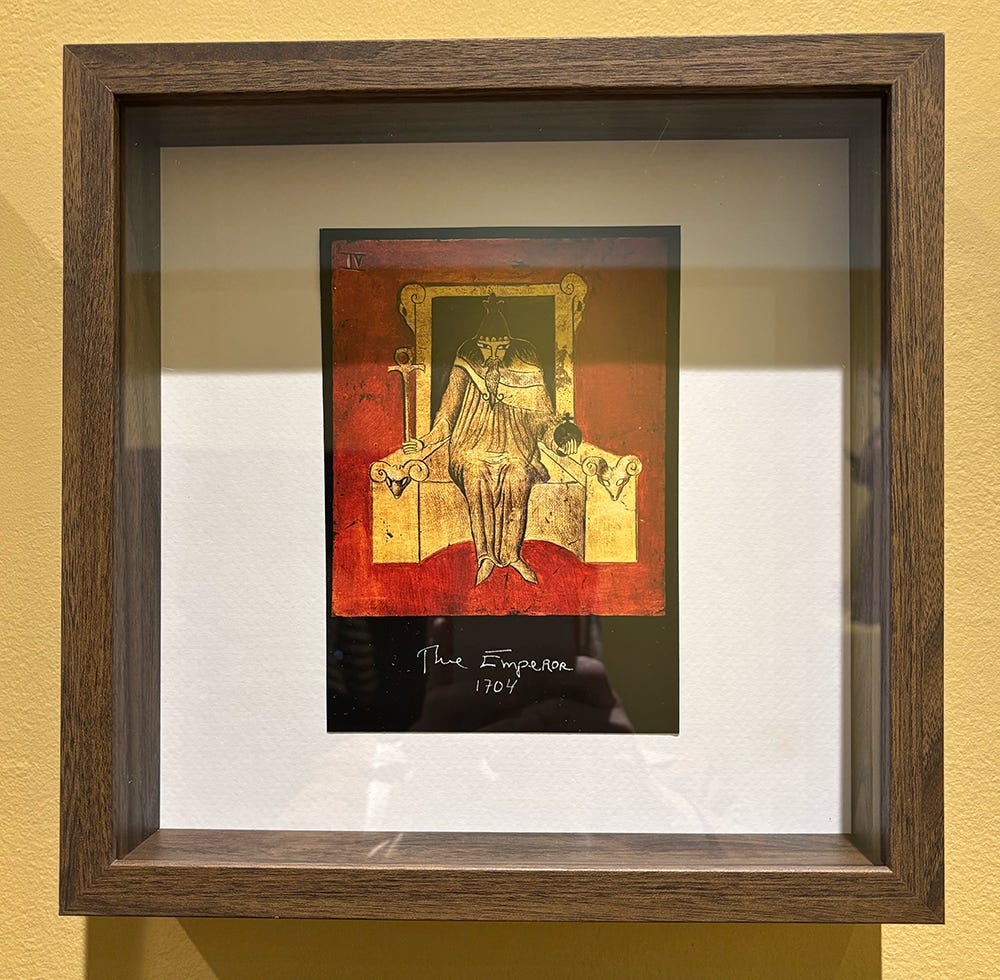
The card I drew was the Emperor, and I’m not sure what phone I picked up. But Carrington’s elderly voice, with an accent that spanned the Old and New Worlds, answered to give me her counsel:
“You are looking for power and recognition… but once you have them, do you know what you will do with them? Some of the buildings are made of gold, but some are not. Can you tell the difference between them?”
It seemed too good to be true, which of course it was. Visiting the L’Space website while writing this, I was dismayed to discover that what I actually heard in that dark little booth was “Carrington’s voice, reconstructed through AI.” I can’t venture to speak on behalf of another artist, especially one as cryptic and mercurial as Carrington, but I have a hard time imagining that this woman, who spent decades crafting her ethereal musings into defiantly concrete form, would approve of having her work fed into a soulless, distorting machine just to be digitally regurgitated for a bunch of goggling dilettantes. On the other hand, I have to wonder if, having survived so much, and having lived so clearly empowered in her vision, she might have been more bemused than bothered. After all, who besides her was better equipped to recognize the irony of a dumb instrument appearing to speak in the voice of the spirits?
I didn’t assemble the triptych at the top until after I finished writing this, but doing so has given me a glimpse at the thread that connects these three very disparate artists: an utter disinterest in brooking bullshit. Dwight, McKinney, and Carrington are all masters of craft who have created elaborate worlds that, in ways both subtle and sweeping, stand in defiance of the structures of power and oppression that would shame and diminish and destroy. Of course there are many, many others who share this spirit. I’d be more honored to spend ten minutes at their table than an eternity in the grandest, emptiest ballroom ever constructed.
I am pretty glad you kept on me to read The Hearing Trumpet.
Very cool! Carrington keeps popping up everywhere for me. In an incredible book I just read "American Abductions" a father creates an app that spits out lines from Carrington in relation to prompts. She becomes the AI. And.... I just got a collage up today of my interpretation of the Emperor Card! Super sychnchronic!!! https://www.blackflowers.online/issues/iv-the-emperor-by-laurence-lillvik